
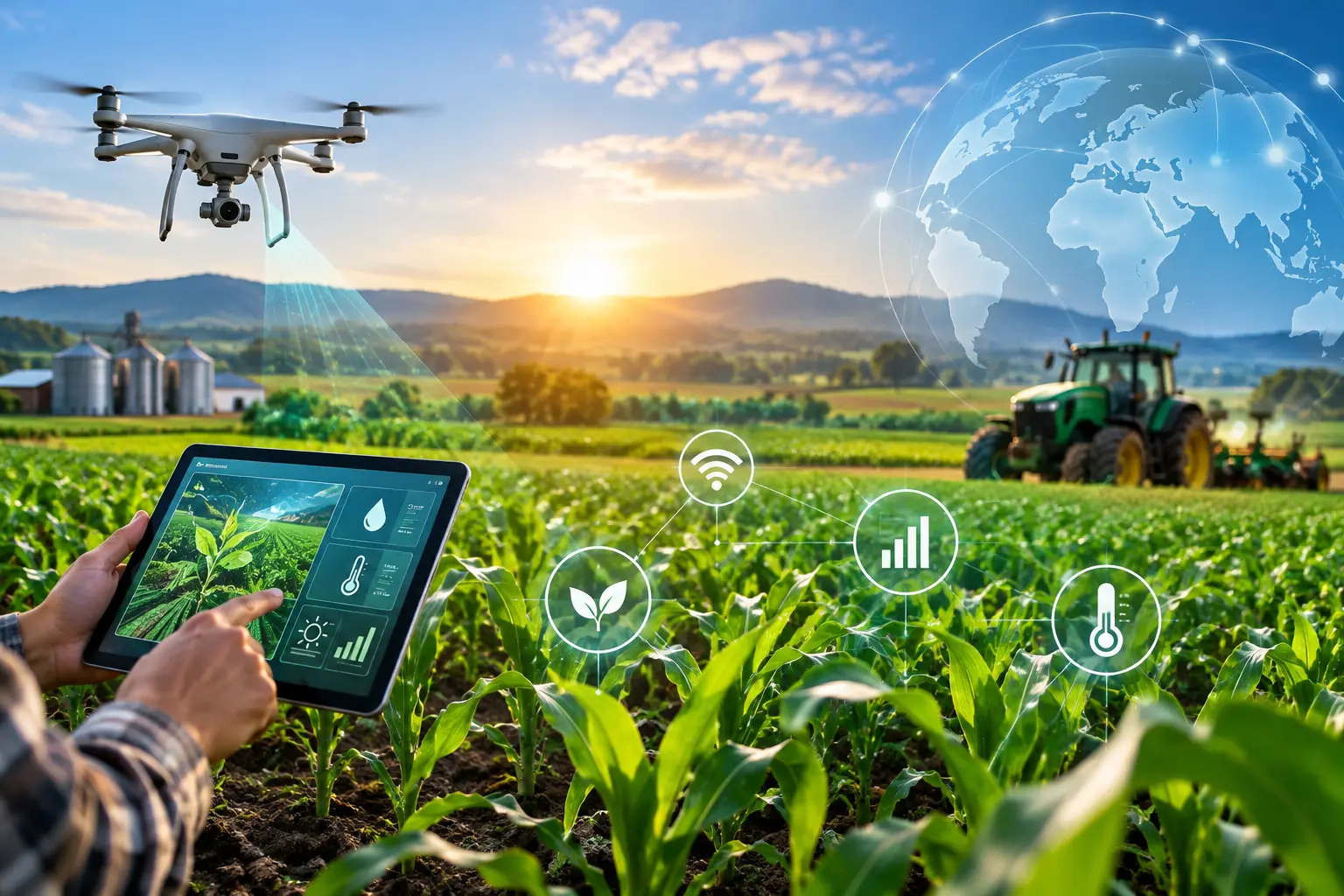
AI in agriculture is quickly becoming one of the most consequential applications of artificial intelligence today, and the timing could not matter more. The world’s population is projected to approach nearly 10 billion by 2050, yet farmland is not expanding to match. In the United States alone, roughly 160,000 farms have disappeared since 2017, an 8 percent decline, as rising costs, volatile markets, and increasingly extreme weather push growers out of the business. Feeding a growing population without cultivating more land means farming the land we already have far more intelligently, and that is exactly where AI is starting to make a real difference.
Forecasting Weather Months, Not Days, Ahead
Traditional forecasting tools focus on the standard two week outlook, which is not nearly enough lead time for farmers deciding what to plant, when to irrigate, or how to prepare for extreme weather. The company ClimateAi was founded specifically to close that gap. Using patented biophysics based AI models, it forecasts extreme weather risk months in advance, more cheaply and reliably than the supercomputer models used by major meteorological agencies.
The impact shows up clearly in the field. Simulations run for farmers in Maharashtra, India, projected that extreme heat and drought could cut tomato output in the region by roughly 30 percent over the next two decades, insights that a seed company then used to fast track drought tolerant seed trials. In a separate partnership with a major food and beverage company, adaptation playbooks were rolled out across 300 villages, reaching around 100,000 smallholder farmers with guidance on seed selection, water management, and optimal planting windows. The result was a productivity increase of up to 40 percent in those communities.
Similar gains are showing up elsewhere. In a partnership with PepsiCo in India, AI powered weather prediction reaching 90 percent accuracy, combined with 45 day yield forecasts, shifted farm decisions from reactive to anticipatory. Crop disease flagged as much as 10 days early let growers apply treatment precisely instead of spraying blind, producing a 25 percent yield increase and an 80 percent reduction in disease related losses across the farms involved.
Breeding Crops in a Fraction of the Time
Developing a new crop trait through conventional breeding can take around 12 years and roughly 136 million dollars in the United States alone. Agritech company Avalo is using explainable AI to identify the specific genes linked to complex crop traits, cutting that timeline dramatically, developing crops up to five times faster and 50 times cheaper than conventional approaches.
One striking example involves broccoli grown for vertical farms, a method of growing crops indoors year round that struggles with high energy and fertilizer costs. Broccoli typically takes more than 120 days to mature outdoors, but by analyzing more than 500 broccoli varieties, Avalo helped develop a version that can be harvested in just 37 days, a window so short that pests never become a problem, removing the need for pesticides entirely.
Plant genetics make this kind of work especially difficult without AI assistance. Unlike animals, many plants carry multiple copies of their genome, four in cotton, eight in strawberries, even ten in sugarcane, making traditional analysis extremely complex. Explainable AI is helping researchers finally make sense of that complexity at scale.
Bringing AI to the World’s Smallholder Farmers
An estimated 600 million smallholder farmers feed roughly a third of the world’s population, concentrated in regions facing the most severe climate stress and the least financial access. Yet most agricultural AI tools have historically been built for large, well capitalized commercial operations. Closing that gap is essential, not optional, for global food security.
In Sri Lanka and Bangladesh, climate smart advisories were delivered to more than 8,200 smallholders facing overlapping crises: fertilizer bans, flooding, and economic collapse happening at once. Farmer adoption reached 90 percent, yields rose by 30 percent, and crop loss dropped by 23 percent. In Nigeria, a similar program covering 45,000 hectares gave stakeholders visibility into crop health and estimated production months ahead of harvest, turning what used to be a seasonal gamble into a calculated, manageable forecast.
Digitizing farmer data is often the essential first step. In Mexico, a partnership with the national agricultural trust FIRA digitized records for 400,000 smallholders and layered in 40 years of historical climate data alongside six month forecasts, transforming scattered notebooks and instinct based estimates into a national data layer that lenders, input suppliers, and government agencies could finally act on.
Smarter Irrigation and On the Ground Innovation
Not every breakthrough happens at national scale. In Lampasas, Texas, farmer David Chapin lost 3,600 olive trees to a single winter storm and later struggled to keep a new, thirstier orchard properly irrigated. Working with IBM and Texas A&M AgriLife, a tool called Liquid Prep pairs an IoT soil moisture sensor with a simple mobile app, giving farmers real time data on where and when to water most efficiently. The project is now expanding to include weather data and soil type information to support even smarter irrigation decisions, built deliberately simple enough for farmers without a technical background to use.
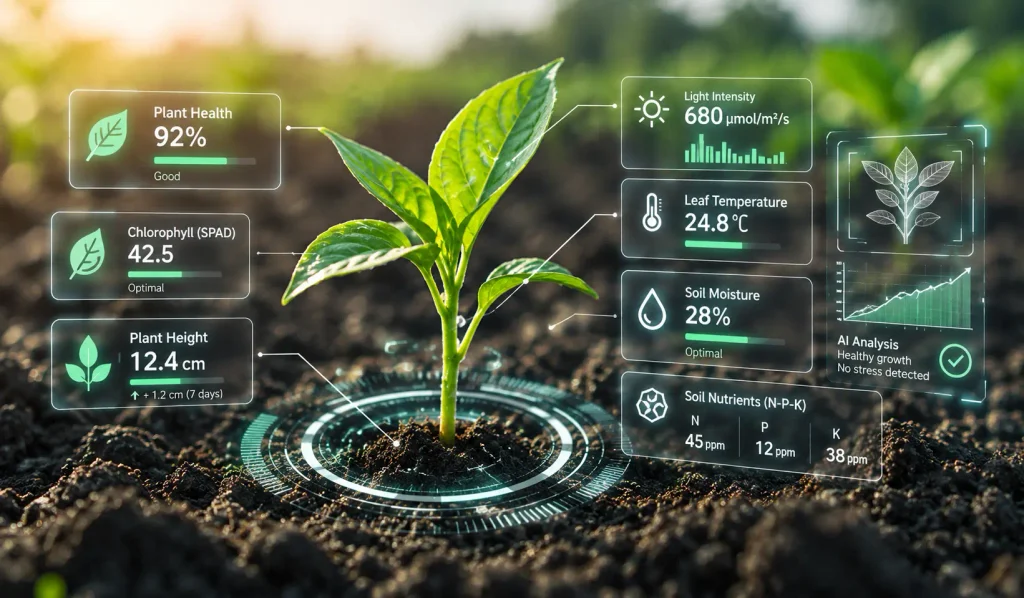
Faster measurement is transforming research too. In Tanzania, a project called Artemis uses AI powered computer vision to count flowers and track plant traits across thousands of plots, a task no human team could realistically do with consistent accuracy. Newer vision transformer models have cut the amount of labeled training data needed from thousands of images down to just a few hundred, dramatically accelerating the pace of plant breeding research.
The Real Challenges Standing in the Way
None of this progress erases the practical hurdles many farmers still face. Thin profit margins make the upfront cost of new technology a genuine barrier, and patchy rural broadband access means AI powered platforms are simply out of reach in many regions. For farmers who have worked the land traditionally for generations, adapting to digital tools can also feel overwhelming, and understandably so.
Trust matters just as much as access. Farmers need real assurance that their data will not be misused, that they will retain ownership of their own information, and that they remain in ultimate control of the systems they adopt. Tools that succeed tend to share a few traits in common: they combine simplicity with clear, tangible benefits, they work at the local level rather than assuming a one size fits all approach, and they integrate smoothly with the equipment and daily routines farmers already rely on, often through nothing more complex than a mobile phone.
Why This Matters Beyond the Farm
The ripple effects of agricultural AI extend well past individual farms. Research from the World Economic Forum estimates that AI amplified digital agriculture could boost agricultural GDP in low and middle income countries by more than 450 billion dollars annually, an estimated 28 percent increase for those regions. When farmers thrive, the benefits flow directly into surrounding rural communities and local economies.
There is also a supply chain dimension that affects everyone, not just producers. Global food waste across the supply chain is projected to reach 540 billion dollars in 2026 alone. Predictive tools that forecast harvest windows and model supply months in advance are already helping major food processors and retailers turn what used to be a weather dependent gamble into a manageable business decision, reducing waste and stabilizing prices further down the chain.
The Road Ahead
Agricultural intelligence, the fusion of AI with genuine on the ground agronomic expertise, is increasingly being compared to the invention of the tractor or the combine harvester in terms of its long term impact. But technology alone was never the limiting factor. As one industry leader put it, feeding a growing population sustainably was never purely a production problem. Today’s central challenge is visibility, intelligence, and sustainability, and that is precisely the gap AI is now positioned to help close, provided it reaches every farmer, not just the largest ones.