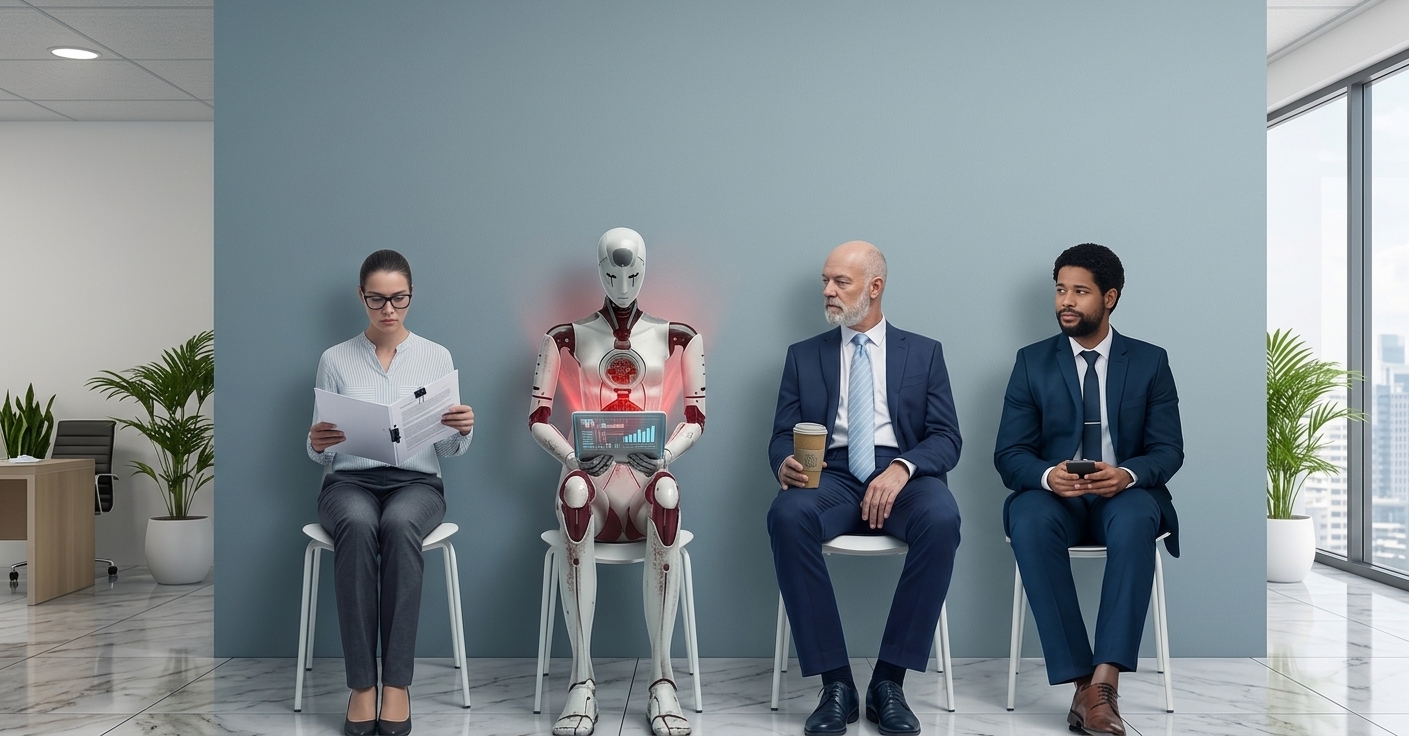
It feels like every week brings a new headline about AI taking over another task. Writing, coding, customer service, even parts of medicine. It is easy to start wondering if any job is truly safe. But when you actually dig into how AI works today, a clear pattern shows up. AI is remarkably good at anything involving patterns, data, and repetition. It is still surprisingly bad at anything involving trust, physical unpredictability, or moral responsibility.
This article walks through the kinds of work that stay firmly in human hands, why that is the case, and what skills actually protect a career going forward.
Why Some Jobs Resist Automation
Before jumping into examples, it helps to understand the underlying reasons certain jobs are hard to automate. Four things keep coming up again and again.
Emotional connection that builds slowly. Some relationships, like the one between a therapist and a client, or a nurse and a frightened patient, take time and genuine human presence to build. AI can respond to words, but it cannot notice a shift in someone’s tone that reveals they are hiding how they really feel, and it cannot earn trust the way a person can.
Physical work in messy, unpredictable spaces. A robot on a factory line thrives because the environment is controlled and repetitive. An electrician rewiring an old house, or a plumber diagnosing a leak nobody can see, faces a completely different problem every time. That kind of hands on troubleshooting, in spaces that never look the same twice, is extremely hard to automate.
Decisions with real moral weight. When a doctor weighs a treatment plan for an elderly patient, or a judge considers a difficult case, the decision carries consequences that go beyond data. Someone has to be accountable for the outcome. AI can offer information and analysis, but responsibility has to sit with a person.
Original creative work rooted in lived experience. AI generates content by remixing patterns it has already seen. It has not lived through heartbreak, culture, or personal struggle, so it cannot originate the kind of creative work that comes from genuine human experience.
With that framework in mind, here are the categories of work that keep showing up as the most resistant to automation.
1. Healthcare and Nursing
Nursing is often the first example people bring up, and for good reason. A nurse is not just following a checklist. They are physically caring for patients, adjusting positions, giving medication, noticing when something looks wrong before any monitor beeps, and managing several patients at once with shifting priorities. AI can track vital signs and flag anomalies, but it cannot hold a frightened patient’s hand or make the split second call about who needs help first. On top of that, licensed professionals carry legal and ethical responsibility for patient outcomes, something no algorithm can shoulder.
This extends to roles like physical therapists and occupational therapists, where treatment has to be adjusted in real time based on how a patient’s body actually responds that day, something that depends on touch and direct observation.
2. Therapists, Counselors, and Social Workers
Good therapy depends on trust that builds slowly, often over many sessions. People arrive guarded or unsure, and a skilled counselor learns to notice small cues, like someone saying “I’m fine” while clearly not being fine, and adjusts how they respond. AI can hold a conversation, but it cannot build that kind of long term relationship, and the advice given in these settings can affect someone’s life in serious ways, so it needs to come from someone who is trained and accountable.
3. Teachers and Instructors
Classrooms are full of different learners moving at different speeds. A good teacher notices who is following along, who is quietly lost, and who understands the concept but cannot yet apply it, then adjusts pace, tone, or examples on the spot. This becomes especially important in hands on or vocational training, where a mistake affects the outcome immediately and an instructor needs to step in and correct technique right away. AI tools are excellent at delivering the same material in different formats, but reading a room and adjusting in real time is still a distinctly human skill.
4. Skilled Trades
Electricians, plumbers, and HVAC technicians work in a world where no two jobs look the same. A wiring problem in a decades old house rarely matches any diagram. The real issue often only becomes clear once a wall is opened or a system is tested. These jobs require someone to physically investigate, interpret what they find, and decide how to fix it safely, often improvising with the tools and space available. That kind of adaptive, hands on problem solving is exactly what current AI and robotics struggle with most.
5. Creative Direction, Design, and Writing
As AI generated content becomes more common everywhere online, people are increasingly drawn to work they can recognize as genuinely human. Creative directors, designers, and writers do more than arrange existing patterns. They pull from lived experience, cultural context, and emotional understanding to create something that resonates in a specific moment. AI is a genuinely useful assistant for drafts and production work, but the final creative judgment, the thing that makes a campaign or a design actually land with people, still comes from a person.
6. Leadership, Management, and Business Ownership
Running a team or a company involves constant judgment calls with incomplete information. Deciding what to prioritize when multiple things go wrong at once, resolving conflict between people, and building a culture that people actually want to work in are all things that depend on human relationships and accountability. Leadership is not a task to be optimized. It is a series of judgment calls made under pressure, often with no clearly correct answer.
7. Cybersecurity
This one is easy to overlook. Cyber threats are created by humans trying to outsmart a system, which means defending against them takes human reasoning too. AI is very good at spotting unusual patterns in data at scale, but deciding how to respond to a breach, weighing privacy tradeoffs, and predicting how an attacker might adapt next all require a person making judgment calls in real time.
8. Emergency Responders
Firefighters, paramedics, and other crisis responders operate in situations that are unpredictable by definition. Every fire, every accident scene, every emergency call presents a different set of variables, and decisions often need to be made in seconds under extreme pressure. This kind of split second improvisation, combined with physical courage and direct human communication with people in crisis, is about as far from a controlled, repeatable environment as work gets.
9. Scientific Research
AI can run enormous numbers of simulations and process huge datasets quickly. What it struggles with is the spark that starts good research in the first place, forming a hypothesis based on intuition, noticing when a dataset might be misleading, or connecting two completely unrelated ideas from different fields. AI accelerates research, but the person asking the original question, and deciding which questions are even worth asking, remains essential.
10. Lawyers and Legal Professionals
AI has become genuinely useful for reviewing contracts and searching case law quickly. What it cannot do is stand in a courtroom and read a jury, counsel a client through a difficult decision, or weigh competing values when a law is ambiguous and there is no clean answer. Legal work often comes down to judgment calls about fairness and consequence, not just applying rules mechanically.
The Pattern Behind All of These Jobs
If you notice a theme running through this whole list, it is this: the safest jobs combine at least one of the following, physical presence in an unpredictable environment, emotional trust built over time, or accountability for a decision that has real consequences for someone’s life. Structured, repetitive, and predictable tasks are the ones most exposed to automation. Jobs full of variability, human connection, and responsibility are the ones that hold up.
Skills Worth Building No Matter What Field You’re In
Whatever career you’re in or heading toward, a handful of skills consistently show up as protective factors:
- Emotional intelligence. The ability to read people accurately and respond with genuine care.
- Judgment under pressure. Knowing what to prioritize when several things go wrong at once.
- Adaptability. Being comfortable learning new tools and adjusting as industries shift, AI included.
- Ethical reasoning. Being able to weigh consequences that go beyond a simple right or wrong answer.
- Basic AI literacy. Understanding what AI is actually good at and where its limits are, so you can use it as a tool rather than feeling threatened or replaced by it.
The Bottom Line
No job is completely untouchable by AI over the long run, and pretending otherwise would not be honest. But the roles that depend on physical adaptability, deep human trust, or real accountability for consequences are, for now, firmly out of reach. The smartest move is not to avoid AI. It is to get comfortable using it as a tool while doubling down on the very human skills, empathy, judgment, creativity, and hands on expertise, that no model can fully replicate.