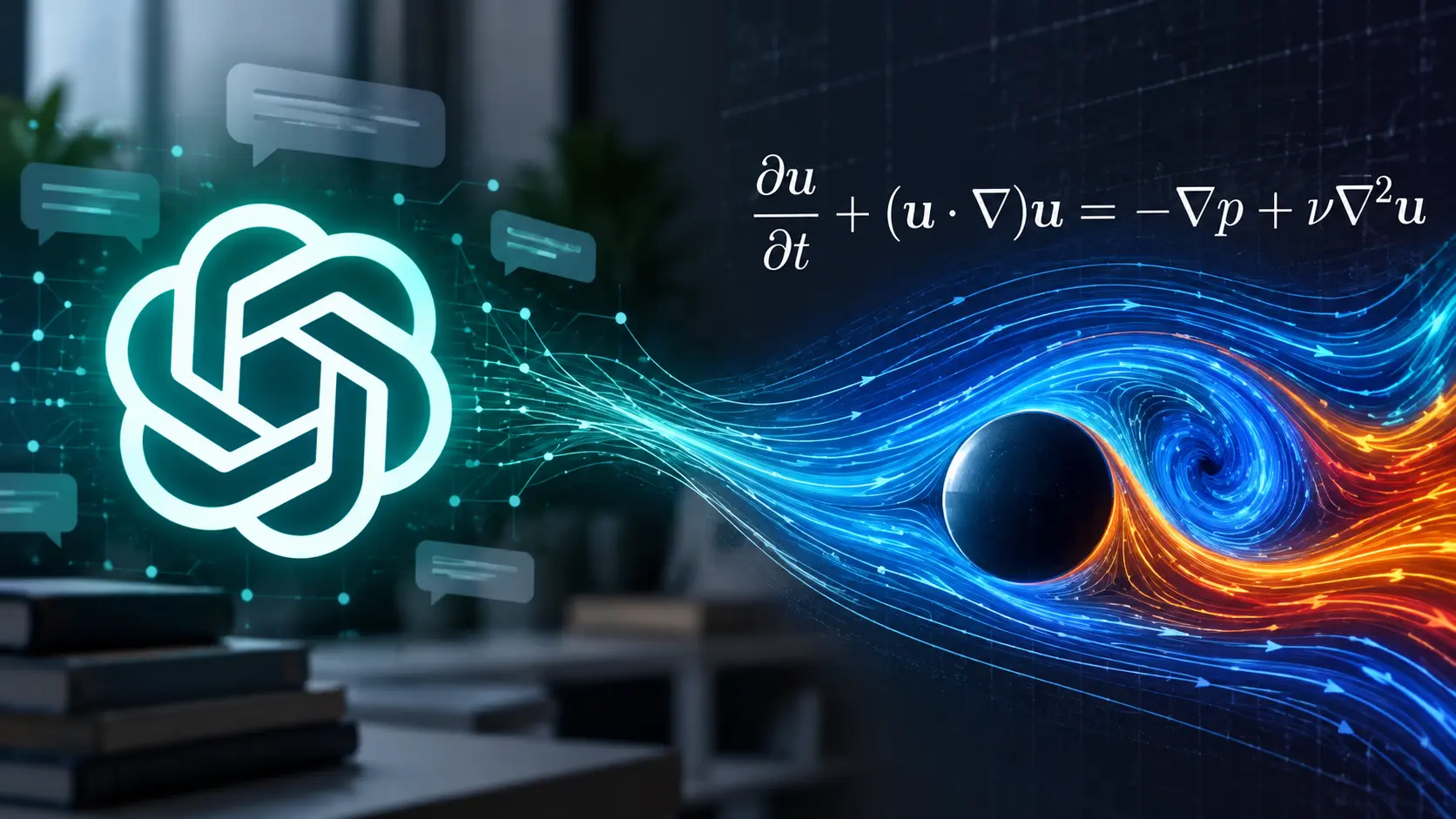
OpenAI’s Navier-Stokes announcement landed like a shockwave across the mathematics community this month. The company claims that by unleashing roughly 10,000 AI agents built on a new internal model, it made real progress on the Navier-Stokes existence and smoothness problem, one of the seven legendary Millennium Prize Problems, in just 88 hours. If verified, it would be a genuine milestone. But the announcement has also triggered accusations, an open letter signed by more than a thousand mathematicians, and what one researcher is calling an “existential crisis” for the field.
What Actually Happened
The Navier-Stokes equations describe how fluids move, everything from blood flowing through a beating heart to wind swirling across a weather map. For over 90 years, a core question about these equations has gone unanswered: do they always produce a consistent, physically sensible picture of fluid behavior, or can they “blow up” into impossible infinite values? Solving it carries a one million dollar prize from the Clay Mathematics Institute.
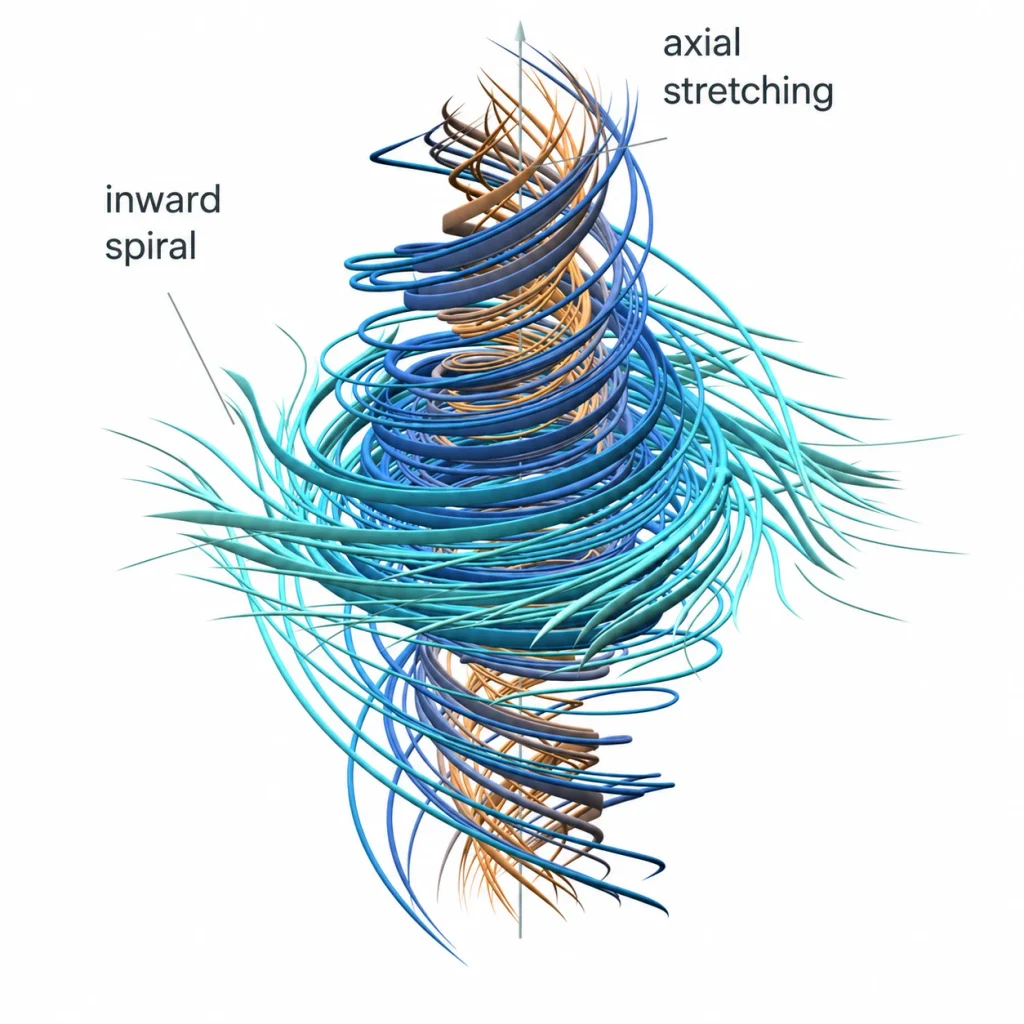
According to OpenAI, the breakthrough began almost by accident. At the end of August, the company started training a new internal model and quickly noticed it was unusually capable at mathematics. Around the same time, OpenAI says it heard rumors that two Millennium Prize Problems had potentially been solved elsewhere, so it pointed thousands of AI agents running on the new model at the remaining unsolved problems. By September 5th, roughly 88 hours later, the swarm had produced a proposed solution to the Navier-Stokes problem.
The scale of the effort was enormous. The AI agents exchanged nearly 3 million messages and generated 130 billion output tokens working on the problem, an effort OpenAI estimates would have cost around 10 million dollars at its own standard pricing. The result reportedly resolves two of the four statements required by the Millennium Prize’s full proof.
OpenAI has been careful to frame this as a first step rather than a finished, verified proof. The Clay Mathematics Institute has not independently confirmed or accepted the result, and outside mathematicians are still working through what OpenAI describes as a dense, 166 page write-up.
The Backlash
The celebration didn’t last long before controversy broke out. Tristan Buckmaster, a mathematics professor at New York University, and Levent Alpöge, a mathematician at rival AI company Anthropic, had independently been chasing a related result for months, using OpenAI’s own coding tool, Codex, along the way. Buckmaster says he learned that details of their progress had reached OpenAI just days before the company published its own Navier-Stokes announcement, and he has publicly questioned the timing.
OpenAI has pushed back firmly, calling the researchers’ related work on the simpler Euler equations “remarkable” and stating it had not seen any of their work through any means before it was released publicly. The company also said no user data was accessed for its effort, though it did concede that it could not entirely rule out that de-identified usage data may have indirectly influenced its models. OpenAI maintains its proof and the pair’s work differ significantly, down to the specific results each proves.
Prominent voices in the field have weighed in on what the episode reveals more broadly. Mathematician Terence Tao noted that even a rumor of someone working on a hard problem can now trigger a massive wave of AI powered effort aimed at solving it first, a dynamic many researchers find unsettling.
A Field Grappling With What Comes Next
Beyond the specific dispute, the announcement has exposed a deeper rift in how mathematicians view AI’s growing role in their field. Some researchers argue the technology simply cannot be ignored. Brown University mathematician Javier Gómez-Serrano, who has partnered with Google DeepMind on AI research for years, called the underlying accomplishment genuinely significant for a problem that had remained open for more than two centuries, even as he described the situation as bordering on an existential crisis for mathematicians.
Others are organizing in response. Nearly 400 mathematicians have joined a new group called the Association for Human Mathematics, formed in August, whose members have pledged not to collaborate with AI companies, with some renouncing the use of AI in their research entirely. The group plans to work with academic journals on handling a rising tide of AI generated submissions and to push back when AI companies claim prestige from open problems without building shared understanding within the field.
The concern has reached the very top of the discipline. On September 11th, 25 Fields Medalists, recipients of mathematics’ most prestigious award, signed a joint letter warning of a “severe misalignment” between AI development and the values of mathematics as a field. Nearly 6,000 additional mathematicians have since added their names.
The tension even disrupted a planned Caltech “mathathon,” an event meant to bring mathematicians and AI researchers together using millions of dollars in donated computing credit from OpenAI and Anthropic. After the backlash, OpenAI withdrew from the event, though student organizers have pressed ahead with an amended version, arguing that younger researchers cannot afford to simply wait on the sidelines while the debate plays out.
Why This Matters
Whether or not OpenAI’s Navier-Stokes result ultimately survives independent scrutiny, the episode marks a turning point in how fast moving AI capabilities are colliding with slow, careful, collaborative human research traditions. It raises genuinely hard questions with no easy answers. Who gets credit when an AI system built on the collective output of human researchers produces a result first? What happens to younger mathematicians if unequal access to powerful AI tools starts determining who can tackle the hardest open problems? And can the field preserve its identity as a form of shared human understanding while still benefiting from tools that are, by any measure, becoming remarkably capable.
For now, the proof sits unverified, the mathematics community remains split, and one of the most eyebrow raising AI claims of the year is still being read, line by line, by the very people it may be starting to outpace.