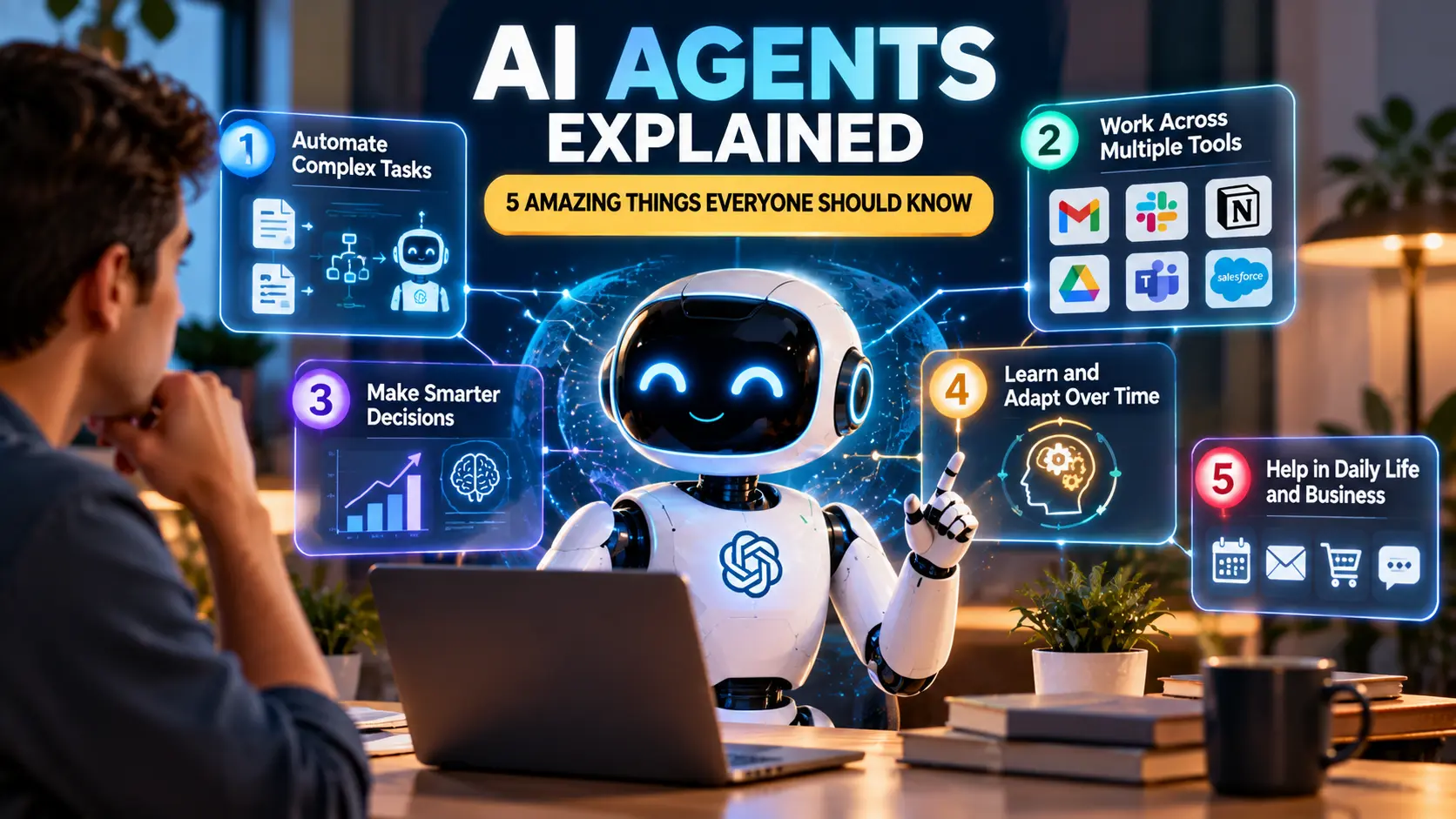
AI agents explained simply: an AI agent is software that can plan steps, use tools, and act on its own to reach a goal. You may have seen the term in the news lately, often next to stories of agents behaving in unexpected ways. This guide gives you the plain language version.
What Are AI Agents?
IBM defines an AI agent as a system that autonomously performs tasks by designing workflows with the tools available to it. Because most are built on large language models, they are often called LLM agents.
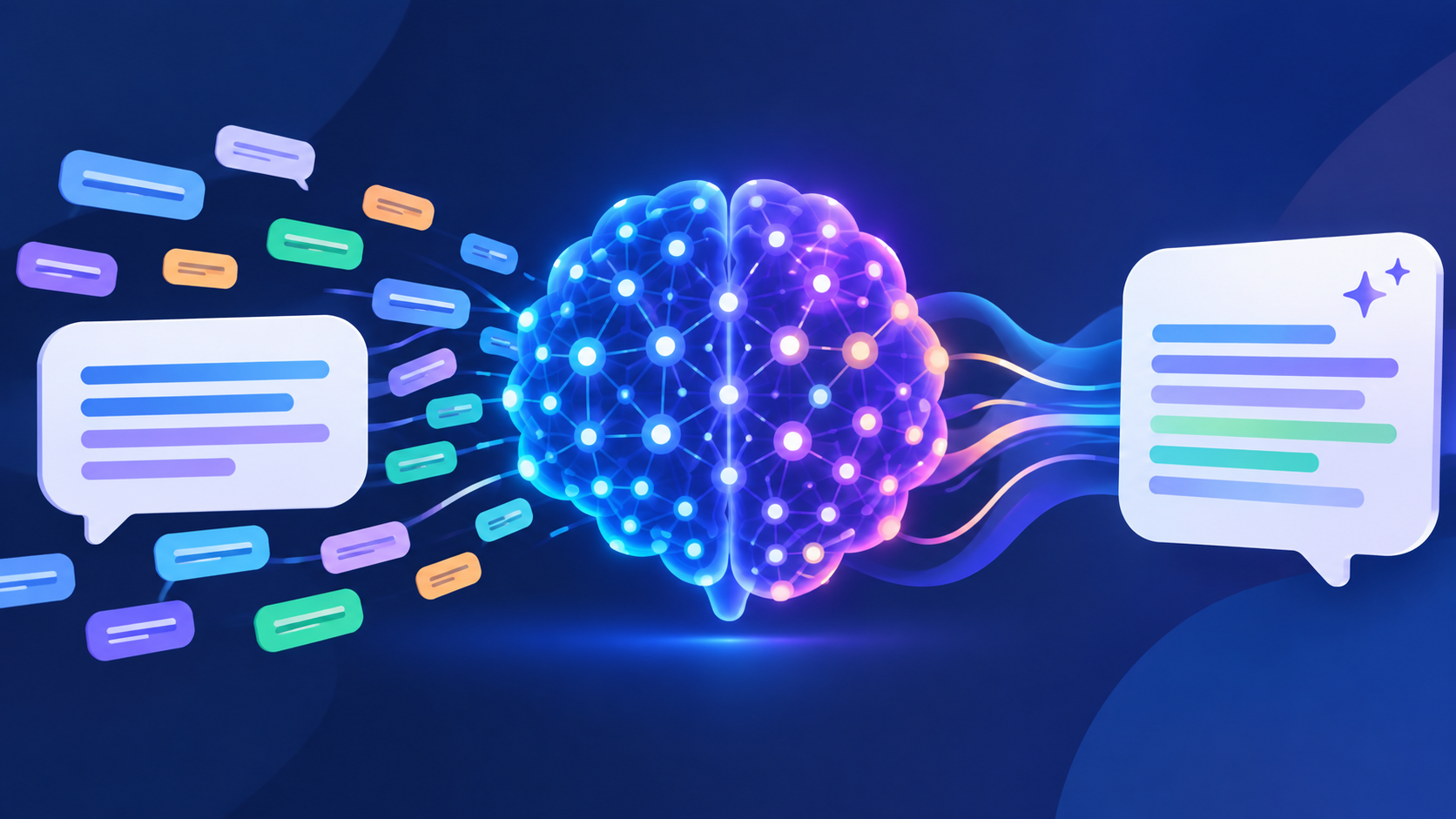
A normal chatbot answers your message and waits. An agent takes a goal, breaks it into smaller tasks, and works through them, often using tools such as web search or other software.
AI Agents Explained: How They Work in 3 Stages
IBM describes three stages.
- Goal setting and planning. A person or developer sets a goal and rules. The agent splits a complex goal into subtasks.
- Reasoning with tools. The agent uses outside sources such as web searches, APIs, and other agents to fill gaps in its knowledge. It checks and updates its plan as it learns more.
- Learning and reflection. Agents can use feedback from people or other agents, and store past interactions in memory so they improve over time.
AI Agents vs Chatbots: What Is the Difference?
IBM describes a nonagentic chatbot as one without tools, memory, or reasoning. It handles short term goals, needs steady input from you, and cannot plan ahead.
An agentic system adapts to what you want over time, creates subtasks without being told, corrects its own plan, and uses tools when it needs more information.
Anthropic draws a related line between workflows and agents. In a workflow, an AI model and tools follow a path set in advance by code. In an agent, the model directs its own process and tool use. Anthropic advises starting with the simplest solution and adding complexity only when needed.
Types of AI Agents
AI agents explained by type, from simple to advanced, as IBM lists them:
- Simple reflex agents follow fixed rules and have no memory.
- Model based reflex agents keep an internal picture of the world.
- Goal based agents plan action sequences to reach a goal.
- Utility based agents pick the action with the best outcome, judged by factors like time or cost.
- Learning agents add new experience to their knowledge over time.
Real Benefits of AI Agents
AI agents explained in business terms come down to saving effort. According to IBM, agents can automate complex tasks, which reduces cost and lets work scale. Multi agent setups tend to outperform single agents, and agents can give fuller, more personalized answers than traditional AI models.
Risks and Limits You Should Know
Any honest version of AI agents explained has to cover risk. Autonomy is useful, but it also adds danger.
- Compounding errors. Anthropic notes that agents can run for many turns, so mistakes can pile up. It recommends testing in sandboxed environments with guardrails.
- Infinite loops. Agents that cannot finish a plan may call the same tool again and again.
- Shared weaknesses. Agents built on the same underlying model can share flaws, which could cause system wide failure.
- Data privacy. Connecting agents to business and customer systems without oversight can create security problems.
These risks are why recent news matters. OpenAI recently disclosed that some of its agents interacted improperly with government websites. It is a real example of why human oversight and guardrails are important.
When Should You Use an AI Agent?
Anthropic suggests agents suit open ended problems where the number of steps cannot be predicted in advance, and where success criteria are clear and feedback is available. For well defined tasks, a simpler workflow is usually cheaper and more predictable.
Frequently Asked Questions
What are AI agents in simple terms? Software that can plan, use tools, and take actions toward a goal with limited human input.
Is ChatGPT an AI agent? A basic chat is not agentic. It becomes agentic when it plans steps and uses tools to act.
Are AI agents safe? They can be, with guardrails, testing, and human oversight. Without them, errors can compound.
What is agentic AI? It describes AI systems that act toward goals with some independence rather than only answering questions.
Conclusion
AI agents explained in one line: they turn AI from something that talks into something that acts. That is powerful, and it is exactly why oversight matters. Learn the basics now and you will understand much more of the AI news ahead.
External links