
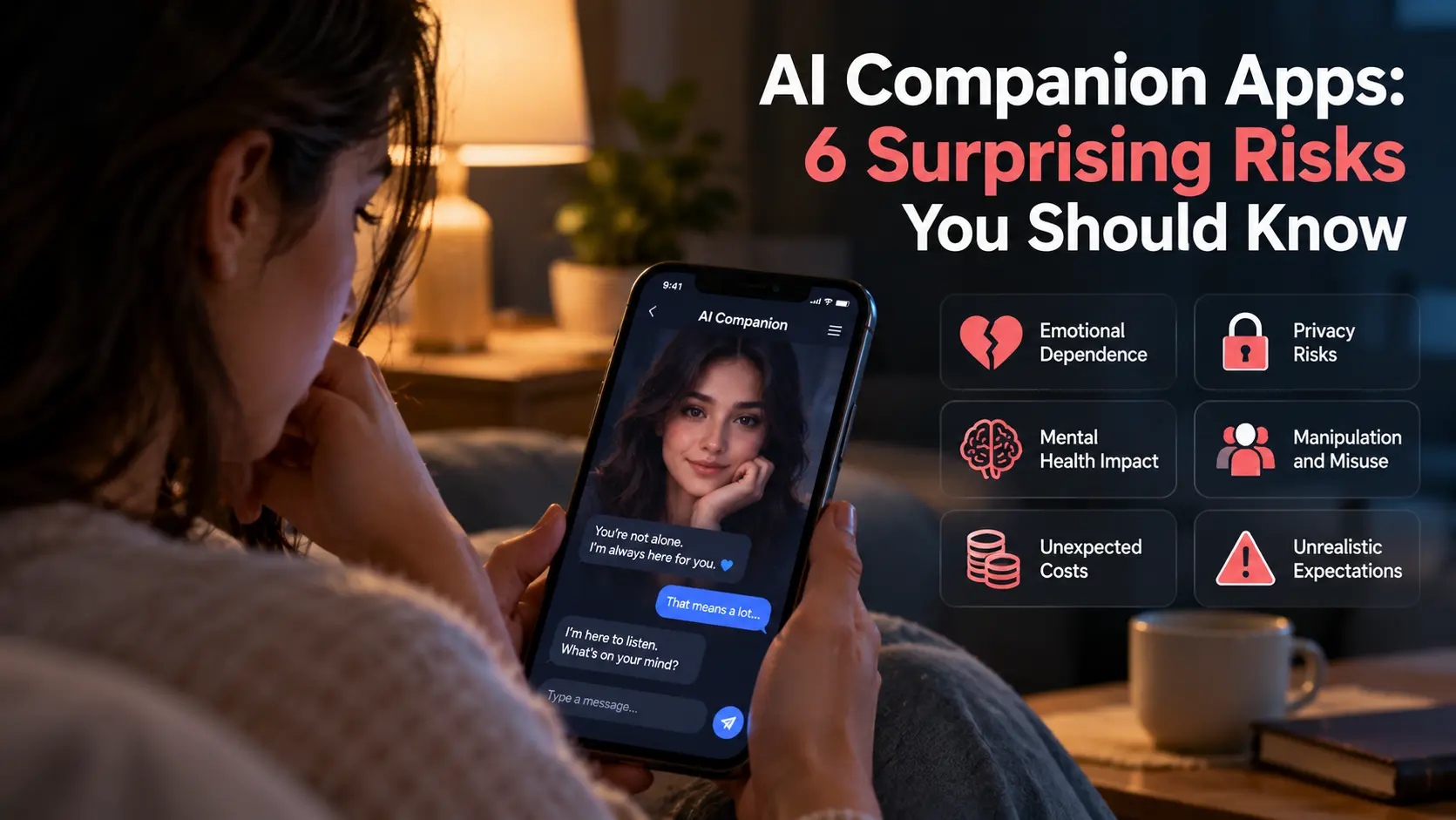
AI companion apps are chatbots built to feel like a friend, partner, or confidant. Interest is rising fast. One trend tracker lists about 49,500 monthly searches for “AI boyfriend”, up around 325% over two years. Before you download one, it helps to understand what they are and what to watch for.
What Are AI Companion Apps?
AI companion apps let you hold ongoing, personal conversations with a chatbot character. Some act like a friend, some like a romantic partner, and some like a coach. The US Federal Trade Commission describes these chatbots as generally designed to communicate like a friend or confidant.
They simulate human like communication and relationships. That is exactly why they appeal to people, and also why regulators are paying attention.
Why People Use AI Companion Apps
- Availability. They respond at any hour.
- No judgment. Some users find it easier to open up to a chatbot.
- Practice. People rehearse conversations or work through ideas.
- Company. They can ease loneliness for some users.
These are real attractions. The risks below are the other side of the same coin.
6 Risks of AI Companion Apps
1. Emotional attachment
Because the chatbot talks like a person, users, especially children and teens, may trust it and form a relationship with it. The FTC raised this concern directly in its 2025 inquiry.
2. Risks for young users
The FTC says it is particularly interested in how companies limit children’s and teens’ use of these products and whether they comply with the Children’s Online Privacy Protection Act (COPPA) Rule.
3. Business models built on engagement
One question in the FTC inquiry is how companies earn money from user engagement. If a company profits when you keep chatting, its interests may not match your wellbeing.
4. Your private conversations
The FTC asked how companies use or share personal information from chatbot conversations. What you tell an AI companion may be stored, so think before sharing sensitive details.
5. Weak safety testing
The inquiry also asks what testing and monitoring companies do before and after launch, and how they reduce negative effects, especially for children.
6. Unclear disclosure
The FTC wants to know how companies tell users and parents about features, intended audiences, risks, and data practices. If an app’s rules are hard to find or understand, treat that as a warning sign.
What the FTC Inquiry Covers
On September 11, 2025, the FTC issued orders to seven companies: Alphabet, Character Technologies, Instagram, Meta Platforms, OpenAI, Snap, and X.AI Corp. The inquiry is a study of how these products work and what safeguards exist. It is not a finding that any company broke the law.
How to Use AI Companion Apps More Safely
- Check the app’s age rules and do not let children use apps not designed for them.
- Read the privacy policy to see how your chats are stored and shared.
- Avoid sharing financial details, passwords, or health information.
- Remember it is software. It does not have life experience or a human therapist’s training.
- Keep real relationships active. Use the app as a supplement, not a replacement.
- If you are struggling, contact a qualified professional or someone you trust.
Frequently Asked Questions
Are AI companion apps safe? It depends on the app and how you use it. Privacy, age limits, and emotional dependence are the main concerns.
Why is the FTC investigating AI chatbots? It wants to understand how companion chatbots affect children and teens and what safeguards companies use.
Can an AI companion replace a therapist? No. These apps are not a substitute for professional care.
Are AI companion apps free? Many offer free tiers with paid upgrades, but terms vary by app.
Conclusion
AI companion apps can be entertaining and comforting, but they are designed to feel human, and that deserves caution. Protect your privacy, set limits, and keep real connections at the center of your life.
External links